Have you ever wondered what actually happens inside a backwater valve during a storm? It is a simple device, but it does an important job. Understanding how it works helps you use it well and keep it working for years.
We install and service backwater valves across Toronto, Peel and Halton. Here is how they work and how to look after one.
What a backwater valve does
Your home’s sewer line carries waste out to the municipal sewer. During heavy rain, the municipal sewer can fill up and push sewage back toward your home. Without protection, it can come up through the lowest drain, usually the basement floor drain.
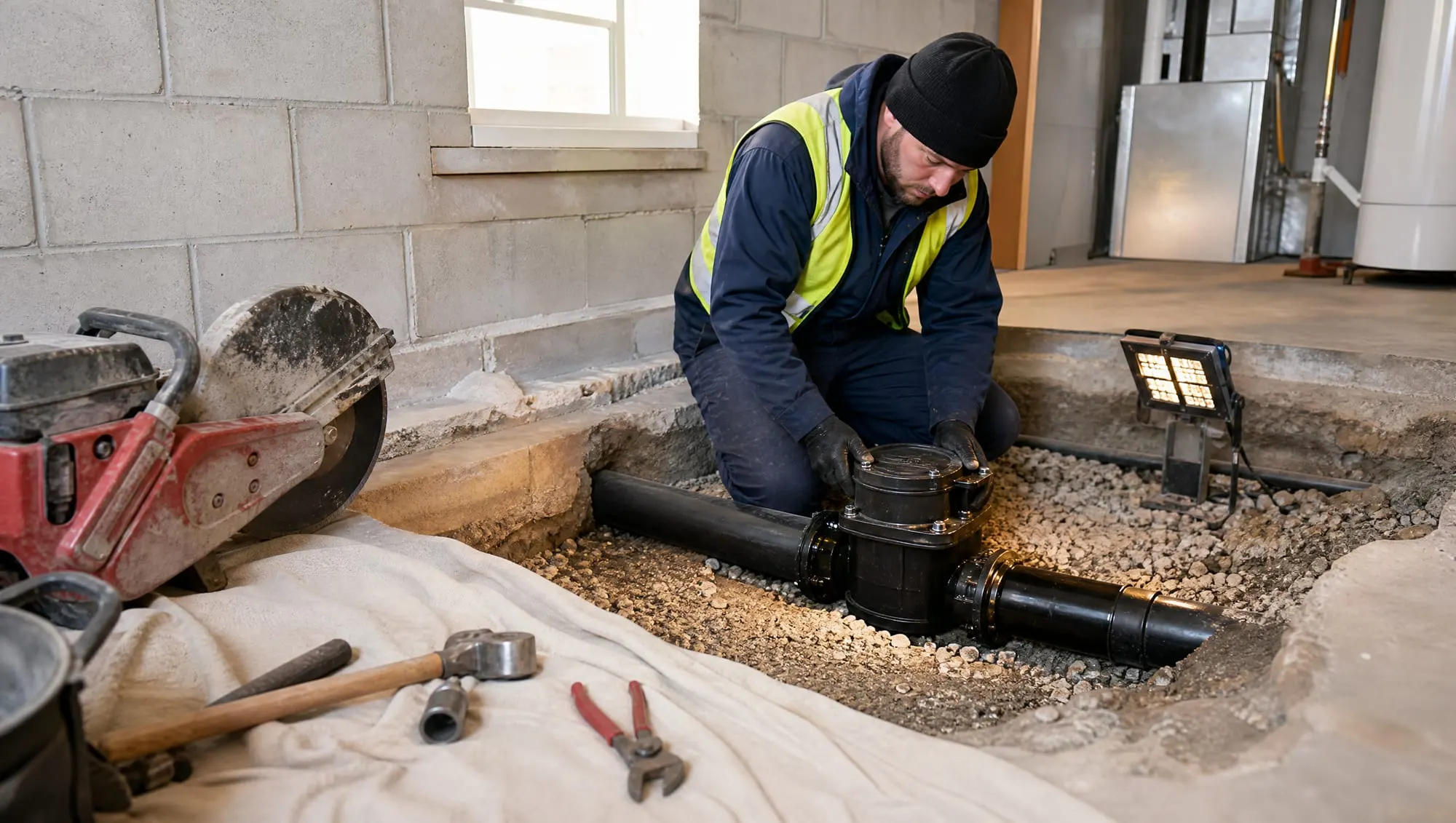
A backwater valve sits in the main sewer line under your basement floor. It lets waste flow out and closes when sewage tries to flow back in.
How it works
Inside the valve is a flap, often with a float. During normal use, the flap stays open and waste flows through. When water starts to flow backwards, the float lifts the flap and it seals against the opening. When the sewer level drops, the flap opens again.
What to do during a storm
While the valve is closed, water from your home has nowhere to go. During a heavy storm, avoid running the washing machine or dishwasher, taking long showers or flushing more than necessary.
How to maintain it
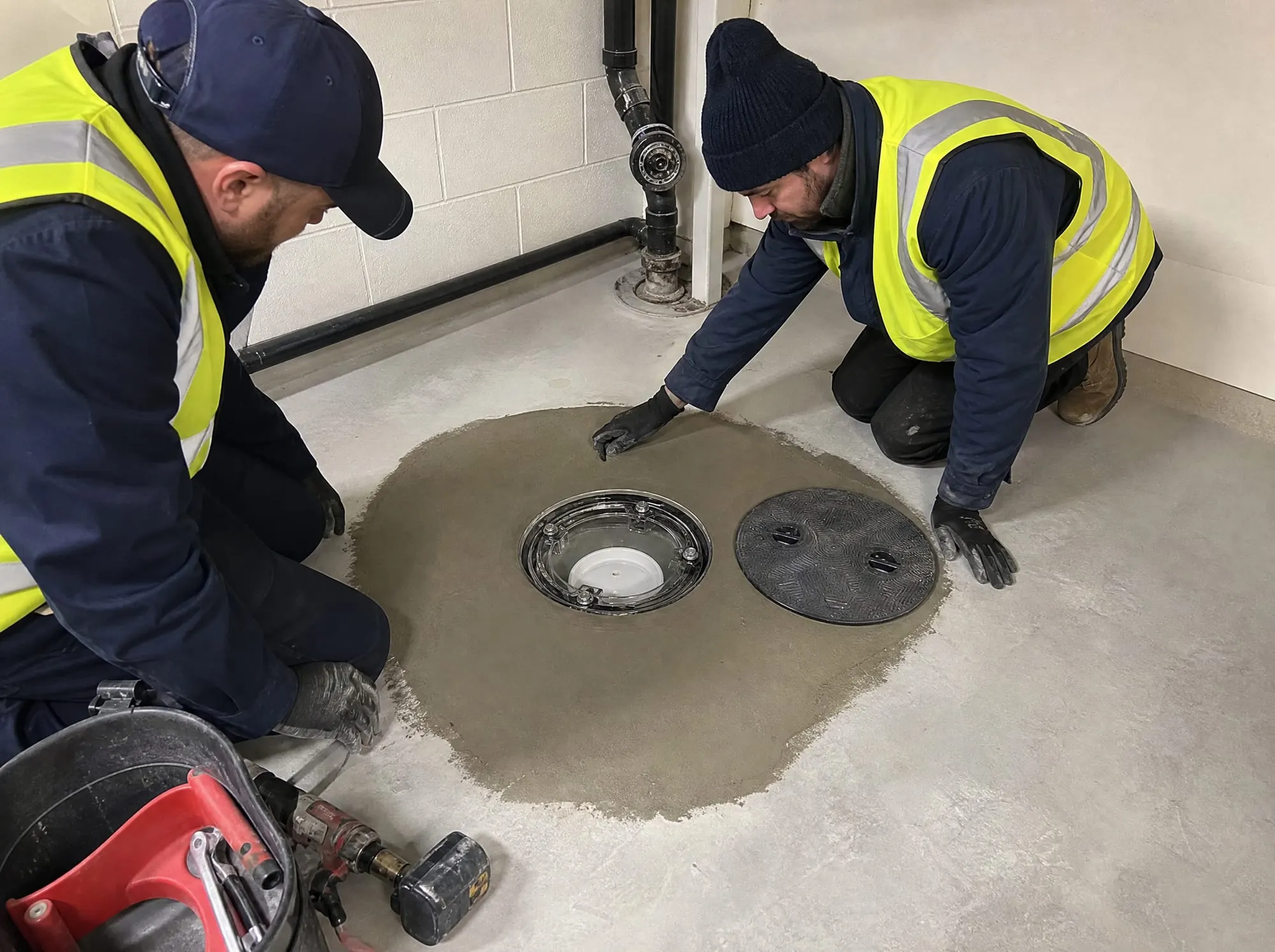
Open the access cover at least once a year and after a major storm. Check that the flap moves freely and nothing is stuck in it. Rinse away any debris, and make sure the cover seals properly afterward. We can show you how during installation, or do it for you.
Pair it with a sump pump
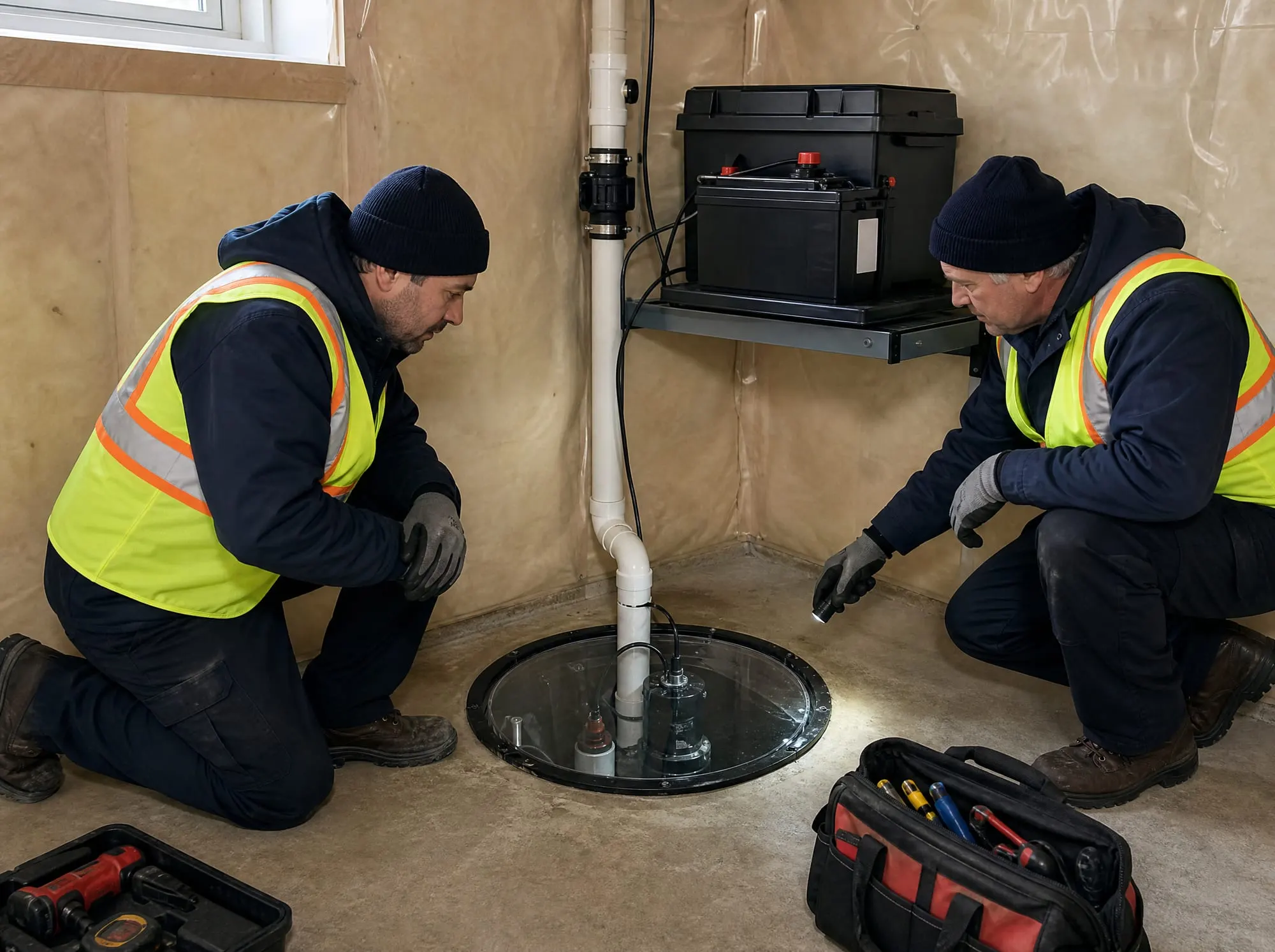
If your weeping tiles drain into the sewer line, foundation water can build up while the valve is closed. A sump pump gives that water a safe outlet, and many rebate programs subsidize both.
Get in touch with our team to install or service a backwater valve.